Brand identity and website: why they should not live separately
Ever opened your brand manual next to your website? If they speak different languages, this guide explains why — and how to fix it. The thesis: brand and website designed separately produce a weaker, more expensive result than when born together. Let's see why, step by step.
- Topic
- Brand
- Read
- 6 min
- Author
- Stefano Fresch
- Updated
- Learn more
- Brand Identity ↗
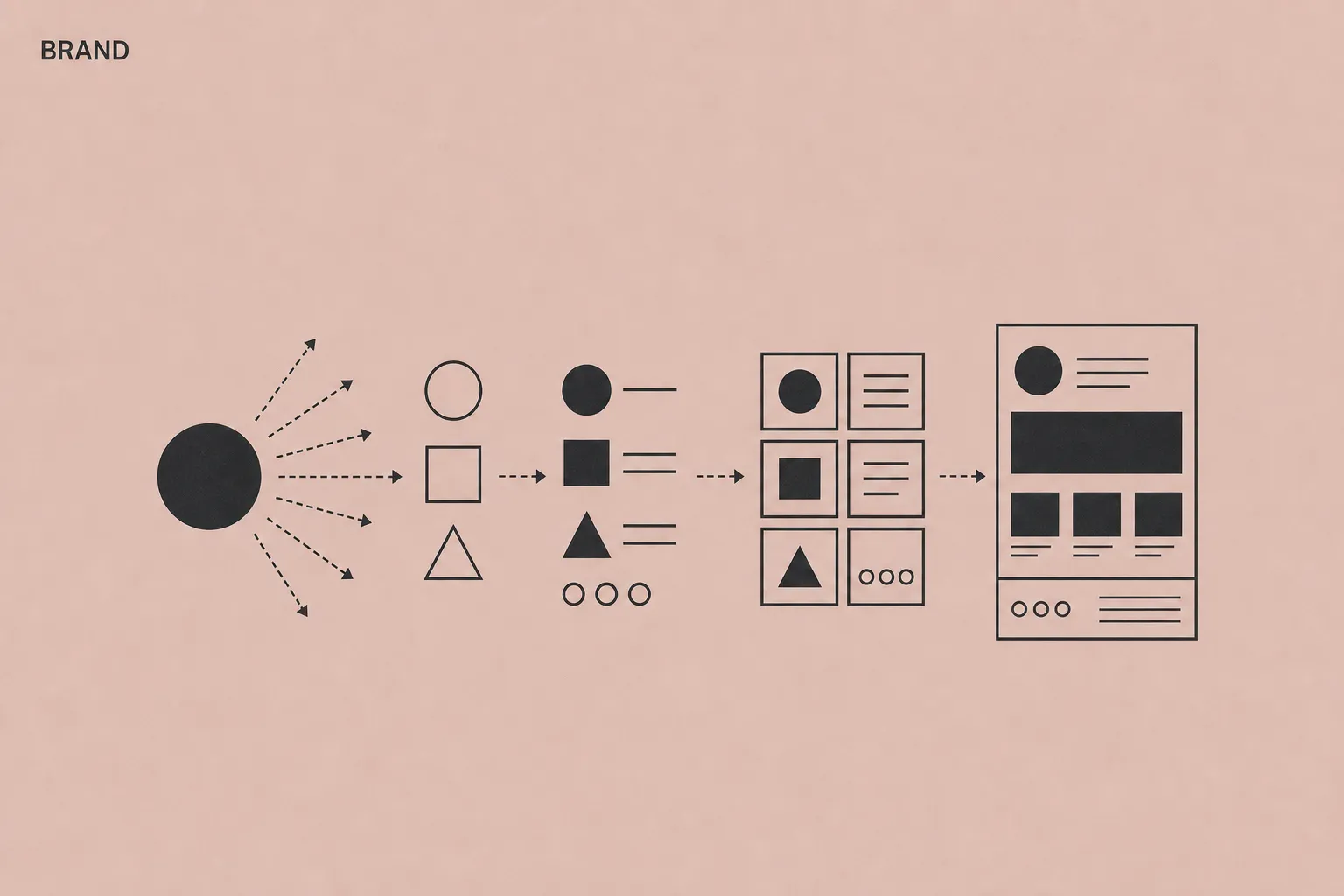
Key points.
- 01
Brand becomes real when it guides pages, components, imagery and microcopy.
- 02
Words are brand too: CTAs, titles and messages need design.
- 03
SEO and brand support each other when positioning is specific.
01
The website tests the brand
Let's start with why so many brands collapse the moment they go online: logo, colours and fonts are not enough. The brand has to hold up in a homepage, a service page, a CTA, an FAQ and on a six-inch screen.
It is a test many identities fail: the elegant palette from the manual has unreadable contrast on buttons, the display font works in the logo but cannot carry a paragraph, the tone of voice defined in three adjectives says nothing about how to write an error message.
Hence the first practical conclusion: designing brand and website together costs less than designing them in sequence, because the weak points surface on real pages — while fixing them is still cheap.
Check yourself
- 01Does the palette hold up on buttons and text, or does contrast die?
- 02Can the logo font carry a paragraph read on mobile?
- 03Was the brand tested on real pages, or only in the manual?
02
The visual system becomes operational
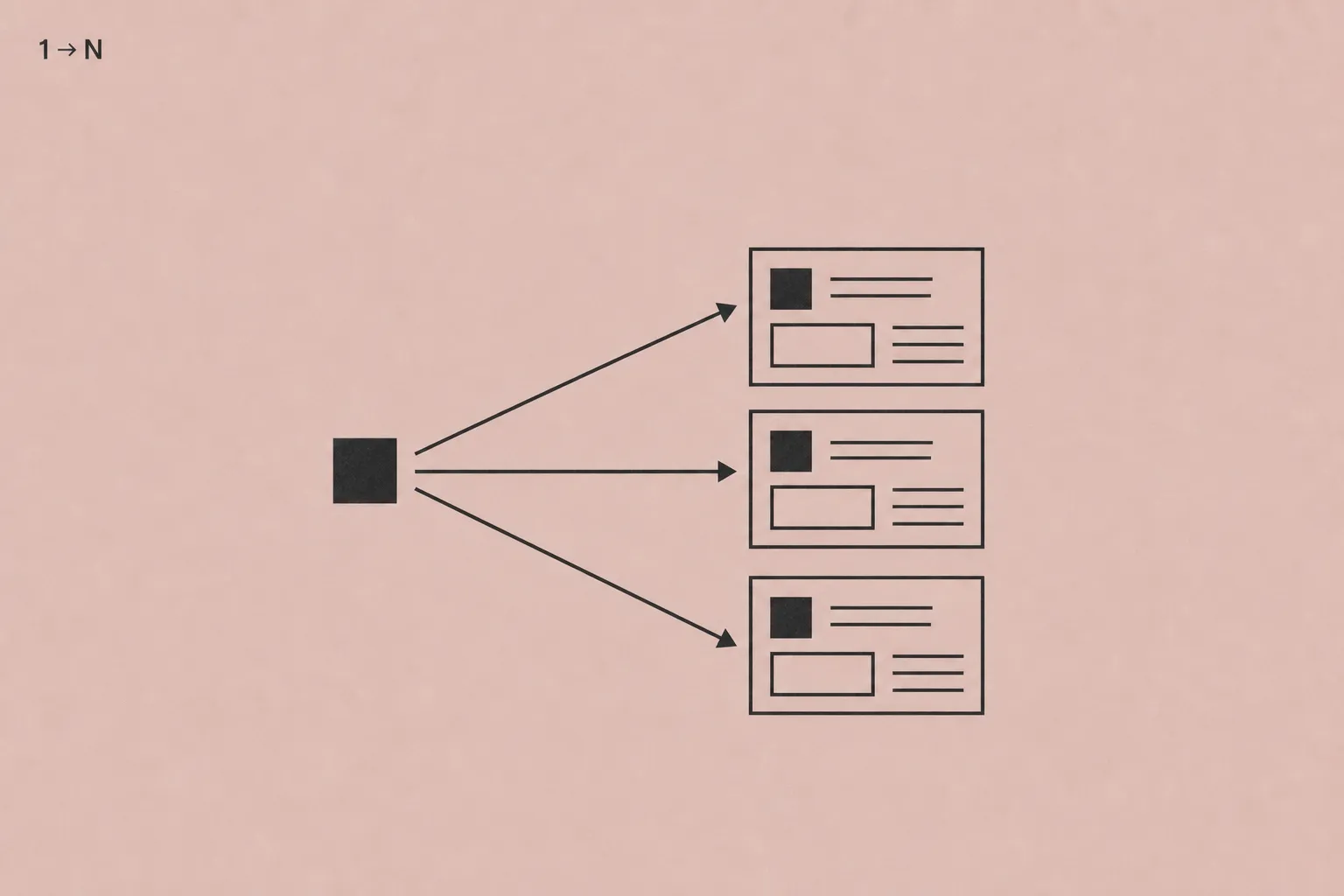
Once past the test, the identity has to become something your team uses every day. A good digital identity produces components: buttons, sections, project cards, editorial modules, image patterns, typographic hierarchy.
In practice: the manual becomes variables — colour, type, spacing — and components built into the site. In Webflow that means global styles and reusable components: when the brand evolves, the system updates and the whole site follows. We describe the how in Webflow for marketing teams.
The result that matters to you: the team stops reinventing the brand with every publish and simply uses it. Consistency stops depending on people's discipline and becomes a property of the system.
Check yourself
- 01Can colours, type and spacing be updated in one place?
- 02Do buttons, cards and sections already exist as ready components?
- 03Can a new page be born consistent without asking the designer?
03
Words are brand too
Then there is the half of the work almost everyone forgets: the words. How the company introduces itself in one line, how it titles pages, how it writes a CTA, what it promises and what it deliberately does not.
Consider how much a single CTA reveals: “Submit” and “Let's talk about your project” belong to two different companies. The same goes for confirmation messages, email subjects, error texts — small details, but the ones visitors meet at decision moments.
Define these rules inside the project, with real examples rather than adjectives: that is what lets the team write new content that sounds like the company, months after launch.
Check yourself
- 01Do your CTAs sound like you, or like any other website?
- 02Is the tone defined with real examples, or with three adjectives?
- 03Do forms, errors and confirmations have written microcopy, or defaults?
04
Brand and SEO support each other
One objection remains, and we hear it often: “won't SEO flatten our brand?” It only happens when SEO arrives before the positioning. With a clear message behind it, titles, headings and content become easier to write — not flatter.
And the flow works both ways: a recognisable company generates branded searches, mentions and spontaneous links — signals SEO alone cannot manufacture. AI systems generating answers also prefer sources with a clear identity and perimeter, as we cover in AEO and GEO.
The conclusion is the thesis we started from, now with the evidence: brand and website are not two projects but one, done well once. If your manual and your website speak different languages, you now know where to start.
Check yourself
- 01Do titles tell your positioning, or just the keyword?
- 02Do headings explain the value, or only the topic?
- 03Do internal links use natural, readable anchors?
How to apply this to your site.
Where to start
- Turn the brand manual into components your team uses every day.
- Define tone, hierarchy and CTAs before building templates.
- Test the identity on mobile, forms, CTAs and service pages, not only on mockups.
Mistakes to avoid
- Do not leave guidelines outside the site: if they do not guide the interface, they do not help the team publish.
- Do not let pages speak with different tone and visuals: visitors feel the inconsistency immediately.
- Do not flatten the message into keywords until it sounds generic.
FAQ.
Should identity be redesigned before the site?
Not always, but a fragile identity becomes more visible once the site is built. Often the efficient path is one project that consolidates the identity while building the website, instead of two separate ones.
How detailed should digital identity be?
Detailed enough to guide pages, components, imagery and recurring content without blocking evolution. The test: can a new team member create a coherent page using only the system, without asking?
We already have a brand manual — is that enough?
It depends what it covers. Many manuals define logo, palette and type but not digital components, page hierarchy, microcopy tone or image patterns. In that case the website project completes the system — better to do it explicitly.
Does rebranding hurt SEO rankings?
The visual change itself does not. Risks appear if the rebrand changes domain, URLs or content — then the rules of a migration apply, with a URL map and 301 redirects.
Bring it to your website.
These resources reflect how we work. If this topic touches your website, tell us where you are: a 30-minute call is enough to see if and how we can help.
Keep reading.
- ↗
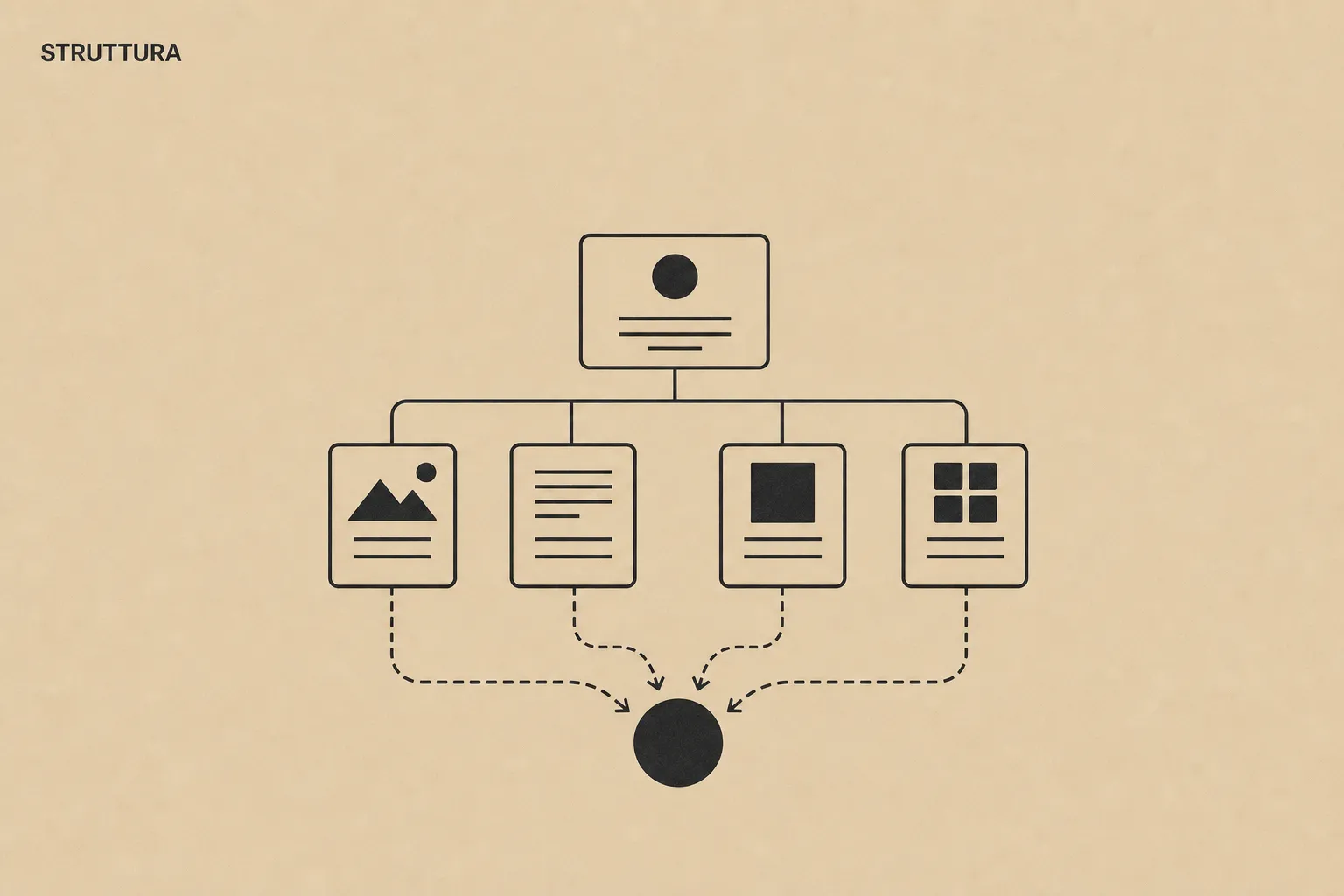 Company websiteModern company website: structure, CMS, brand and SEOWhat makes a company website useful: clear architecture, manageable CMS, coherent brand and a solid technical SEO base. With practical signs it is time for a redesign.↗
 - ↗
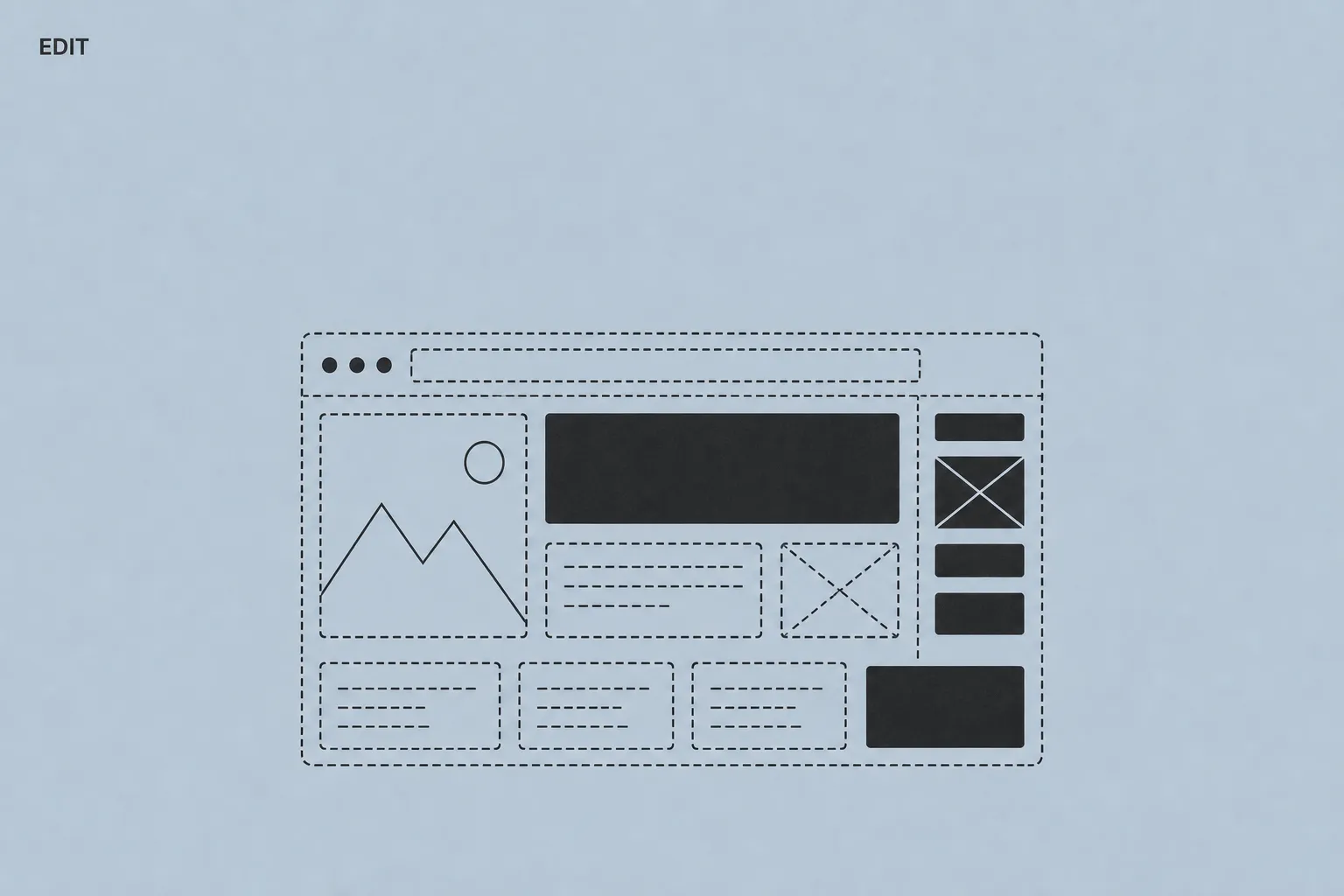 WebflowWebflow for marketing teams: autonomy without losing brand controlHow Webflow can give marketing teams autonomy while preserving brand consistency, performance and site governance. What to make editable — and what not.↗
 - ↗
 AEO and GEOAEO and GEO: preparing a company website for AI answersWhat AEO and GEO mean for a company website: entities, answers, structured content, FAQs, trust signals and concrete first steps.↗